For the past few years, more precisely since the launch of ChatGPT in November 2022, there has been intense discussion about the potential of artificial intelligence technology and the impact it will have on companies.
These discussions — and all kinds of predictions — have been fuelled, quite rightly, by spectacular technological advances, fierce competition between major IT companies, as well as by the geopolitical stakes involved, which have created a genuine “arms race” aimed at gaining a decisive advantage for whichever country develops the most advanced AI model.
In March 2025, Dario Amodei predicted that “within three to six months, AI could be writing 90% of the code, while in around 12 months it could be writing virtually all of it.” However, we are still far from seeing this prediction come true.
Dario Amodei is the CEO of Anthropic, the company behind Claude, which is currently considered one of the best AI assistants available. And he is not the only one to have made such predictions, some of them expressed in almost apocalyptic terms — particularly when it comes to the future of the workforce, which, supposedly, will soon be completely replaced by AI-based agents.
At an individual level, many of us already use AI, either for personal purposes or for work-related tasks. Nevertheless, we do not feel that AI is likely to replace us anytime soon.
AI Adoption in Companies — Something Is Not Working
Quite a few companies have already tried to implement AI, but relatively few projects are considered successful. Why is adoption still so low, and why is success so rare? In the following sections, we will try to answer these questions and offer several recommendations, based on our experience in implementing IT systems.
Modest and Clearly Defined Objectives
First of all, do not assume that you will implement an AI system capable of replacing employees, because, for the time being, this is simply not possible. Many companies have fallen into the trap of unrealistic expectations. Do not confuse an employee’s job description with what that employee actually does. Yes, the job description may contain only a few lines, but in reality, an employee makes dozens of micro-decisions every day, and no AI system can make all of them without a certain degree of risk. Instead, you can consider using AI for some of the activities performed by employees.
For example, let us say that one of the responsibilities of experienced employees is to train new colleagues and teach them the company’s procedures and processes. Training a new employee is the kind of activity that does not immediately generate added value for the company, but it can consume valuable time from employees whose work does generate that value.
For this purpose, we could consider using a chatbot that has access to all of the company’s documentation — manuals, procedures, and so on — and can interactively provide new employees with the information they need, at least during the initial stage of their training.
Structured Information and Well-Defined Processes
For an AI tool to work properly, it needs high-quality information, and the quality of that information depends on the IT systems that are already in place. There is a major difference between having company data scattered across Excel files and various applications that do not communicate with one another, and having an ERP system that brings as much of the company’s financial and operational data as possible into a single database.
Beyond that, there must also be clarity regarding business processes. This clarity should be reflected in the existing IT systems, but its source lies in management and in the quality of the company’s organisation. In other words, everyone should know who is responsible for each activity, what each person is expected to do, and when. Ideally, the company should have internal working procedures that are as detailed as possible.
Returning to our previous example of the chatbot that assists new employees, there is little point in an employee asking it how to submit a leave request if there is no documented procedure explaining how this should be done, which form needs to be completed, who it should be sent to, and so on. At best, the employee will receive a generic answer.
Many companies have rushed to adopt AI without taking this aspect into account. This is why conversations with chatbots on websites are, in many cases, simply a source of frustration for people trying to obtain information. And this is not the AI’s fault — it simply does not have access to the information it needs.
Humans Must Remain in the Decision-Making and Control Loop
No matter how impressive the results produced by an AI tool may be, one fundamental issue remains: these results are generated probabilistically rather than deterministically. This means that the same question may produce slightly different answers. This degree of probability — and therefore of potential error — may be acceptable when using AI for personal purposes, but not necessarily in a business environment. People need to verify the results and, where appropriate, validate certain decisions.
In the case of the chatbot used in our example, we could instruct it to assess its level of confidence in the answer it provides. If it estimates that its confidence falls below a certain threshold, it should not give that answer to the new employee. Instead, depending on the subject of the question, it should direct the employee to a colleague with expertise in that particular area.
Do You Want to Implement AI in Operational Processes?
Our recommendation is to start by implementing AI in processes that support your core operations — such as the example described above — so that you can become familiar with the technology and understand its limitations. However, if you want to move on to operational processes, the ones that define your company’s core activity, our recommendation is not to do so before you have implemented an ERP system.
An ERP system provides the foundation on which you can build, because it contains a database that delivers real-time information on which sound decisions can be based. Through its configuration, an ERP system also incorporates a large part of the company’s business rules. In addition, some ERP systems are already designed to interact with AI tools.
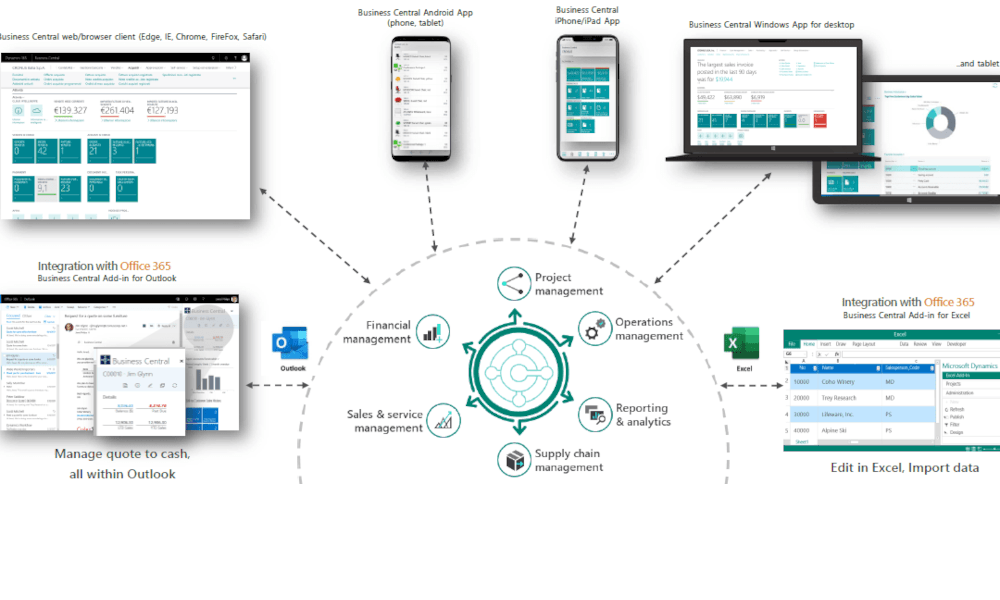
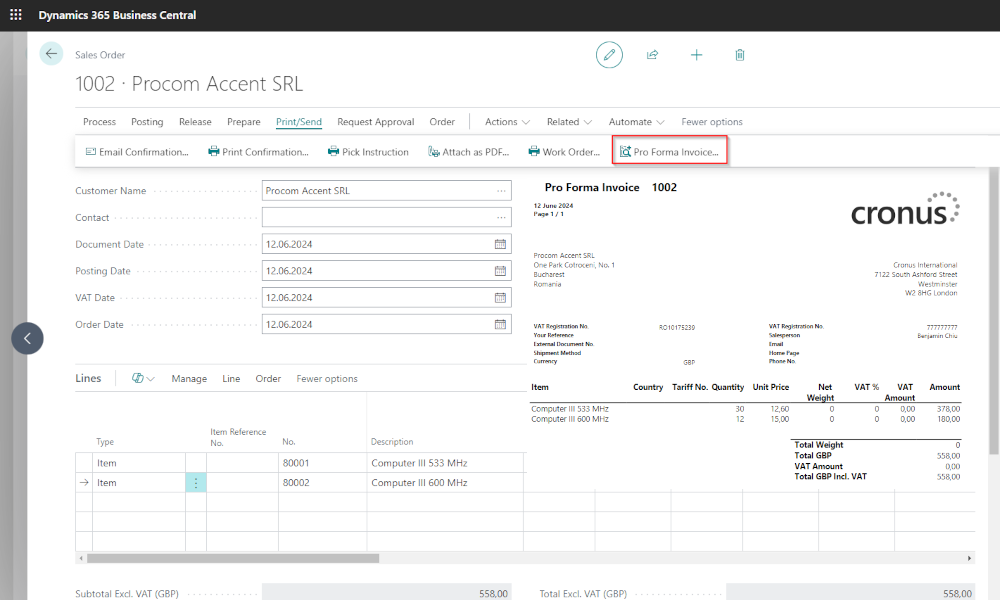
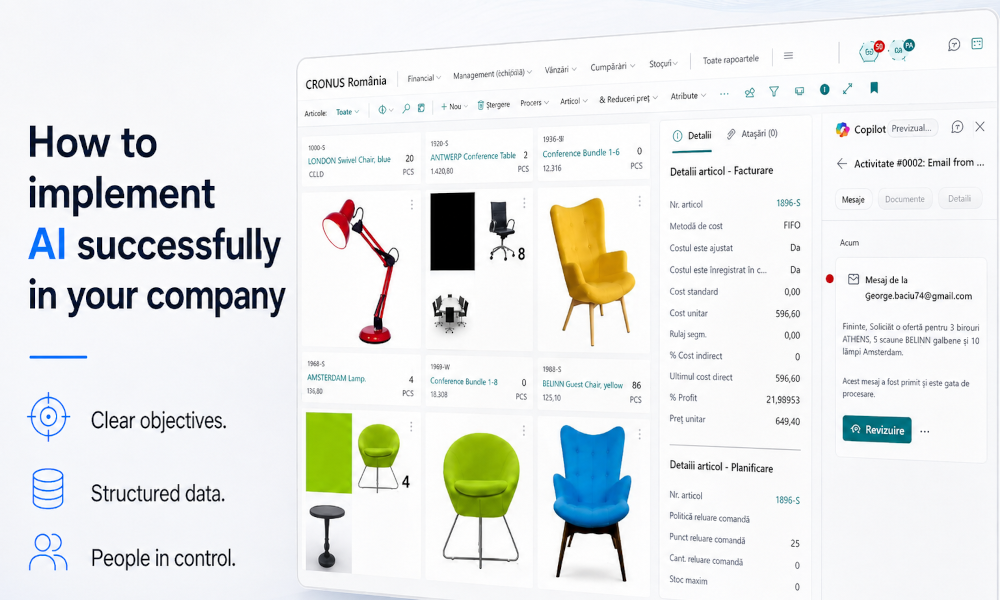
For example, Microsoft Dynamics 365 Business Central, the ERP system provided by Microsoft and also implemented by ELIAN Solutions, already includes AI-based capabilities. It offers a chat functionality — Microsoft Copilot — which can answer questions expressed in natural language, as well as agents that can operate autonomously to generate sales orders, purchase invoices, or expense reports.
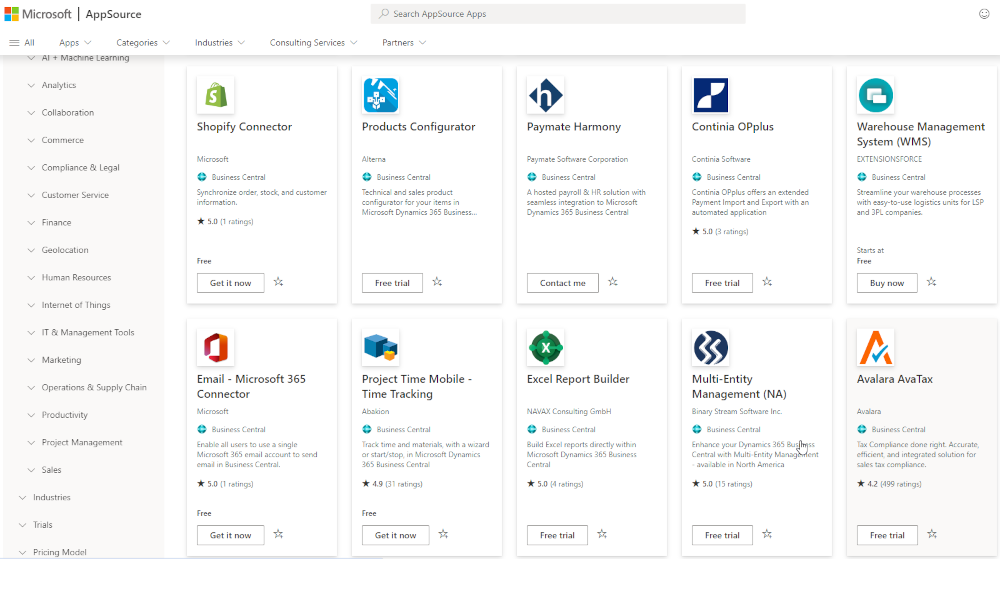
It is also worth noting that the system is open to interaction with other AI agents that can operate outside Business Central, while AI agents can also be built from scratch directly within the system.
In fact, ELIAN Solutions has already implemented such an AI agent internally, built within Business Central, alongside other AI tools used in the company’s processes, including development, consultancy, and sales.
ELIAN Solutions has been active since 2008 as an implementer of Microsoft Dynamics 365 Business Central . With a team of over 80 specialists and a portfolio of more than 400 clients, ELIAN Solutions is one of the leading ERP partners.
This article appeared originally in Romanian in “Ziarul Financiar” – see here